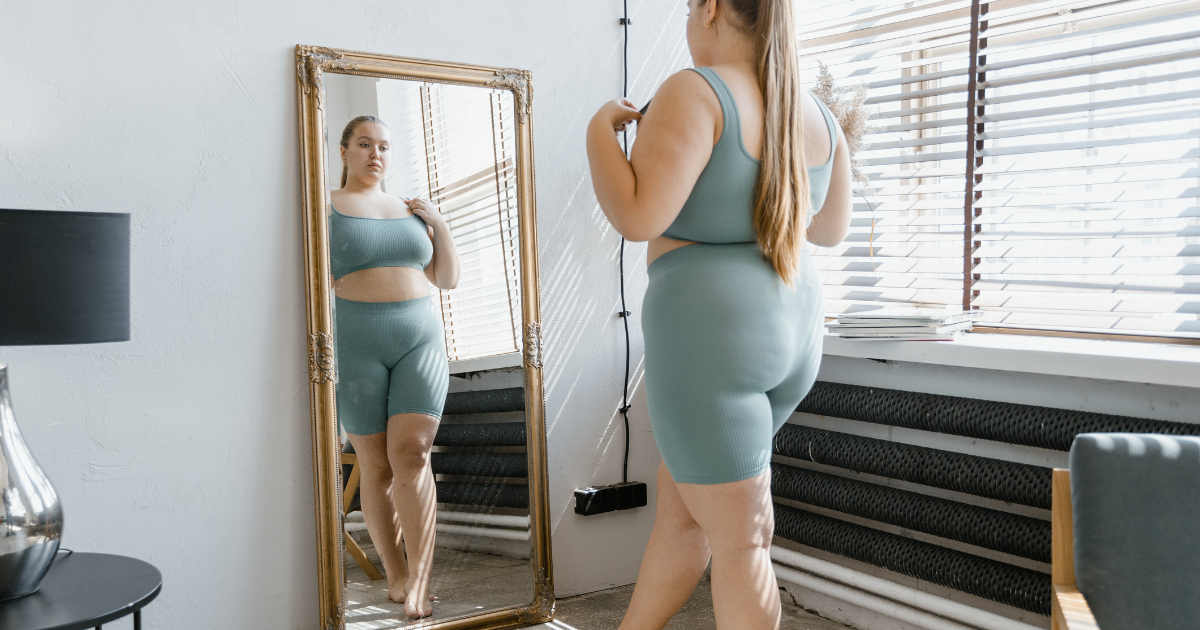
Navigating young women’s relationship with their own bodies in the modern world involves not only managing physical and social spaces, but also being constantly aware about the digital world. It is a place where their bodies are watched, compared, edited, and commented on in group chats, feeds, and video calls every single day (OECD, 2020). It is not only everpresent, but also strongly affects how young women perceive themselves, their social standing and abilities to participate in this world. Even more so, more time on social media is linked to depressive symptoms, poor sleep, online harassment, low self‑esteem, and negative body image, with stronger effects for girls (European Parliament, 2023). This article will give you a few insights on what we need to know about these spaces and opportunities for body liberation from a youth work perspective.
Online spaces are not neutral
Social media and messaging apps are often treated like neutral tools for “communication” or “dissemination of results.” In reality, these are spaces with very tangible impact and role in our lives. The key aspect of online presence is visibility and visual appearance – some of the most sensitive aspects young bodies might encounter, and also an environment where beauty ideals are repeated and rewarded.
Image‑based platforms like Instagram and TikTok promote curated, filtered pictures that centre thinness, conventional beauty, and perfection (Vandenbosch et al., 2025). Girls and young women are more likely than boys and men to report negative body image, eating concerns, and exposure to sexist or gender‑based abuse linked to social media use (European Parliament, 2023). This means online spaces are not just “fun” or “social”; they can be sites of constant body policing and weight stigma, especially for bigger bodies and other marginalized identities (Pearl et al., 2021).
The invisible work of curating your body online
Behind every selfie or story, there is work. Young women learn early that some bodies are rewarded and others are punished (Gill, 2022). In daily life it might look like:
- Taking dozens of photos to find one “acceptable” angle.
- Editing skin, waist, or jawline to match thin‑ideal or “fitspiration” aesthetics (Holmberg et al., 2018).
- Hiding parts of the body, avoiding full‑body shots, or never posting at all if they feel “too big” or “too different” (Vandenbosch et al., 2025).
Studies show that intensive appearance‑focused social media use and photo editing are linked to self‑objectification, appearance anxiety, and body shame (Vandenbosch et al., 2025; Tiggemann & Zaccardo, 2018). Many young women also cope with weight‑related bullying and derogatory comments about their appearance in chats and comments; this is associated with poorer self‑esteem, depressive symptoms, and disordered eating (Puhl et al., 2025; Puhl et al., 2021).
Besides being a significant mental health concern, it is rarely discussed how much mental resources and time (young) women spend curating their online presence. This labor is invisible (often discussed in Feminist theory as unpaid labor or emotional labor), yet takes away a significant portion of their attention and thus opportunities for authentic being and participation. Even more strain is put on them due to the everpresent nature of digital presence with no ways to switch off – the body is always on display, always at risk of being judged, captured, or forwarded.
How this shows up in practice
All of the elements described above influence how young women show up in youth spaces and in the world too. In our report “Body Liberation for Gender Equality in Europe” it was once more highlighted that young women avoid participating in activities where their bodies might be judged or valued, and online spaces are no exception to that. In self-curated imagery they choose to “perform” or filter their visual traits, but in social situations it manifests rather as pulling back or disengaging. For example:
- Reluctance to turn cameras on in online sessions because they are afraid of how they look that day or of being screenshotted (OECD, 2020).
- Withdrawing from project videos, even when they are active participants offline, because they don’t want their body in public online (Vandenbosch et al., 2025).
- Staying quiet in group chats when discussions or jokes slide into comments about weight, appearance, filters, or “glow‑ups” (Austrian Safer Internet Centre, 2024).
Seeing the widespread and documented acknowledgment of such patterns hints at systemic issues rather than individual confidence shortage. By ignoring this we risk reinforcing a pattern where only certain bodies feel safe being visible in our activities, yet even more importantly – take space to share their authentic self. It is crucial to keep in mind that feeling safe to speak up and participate is directly affected by the intersections of size, disability, race, class, etc. (European Parliament, 2023) and therefore becomes a significant topic to consider when talking about inclusion.
What can you do in your activities with youth
Our approach for youth work invites us to use principles of body liberation as a tool for empowerment. Firstly, by shifting away from putting the responsibility on individuals (“she should act more confident”) to questioning and reshaping the systems that make some bodies more vulnerable (Pearl et al., 2021; Latner et al., 2021). It is clear that only a broader culture change and limitations on digital media would contribute to solving these issues significantly, but it is not an easy goal. While we slowly work at broader change, youth work can implement a few strategies and tools to empower young women and foster places where they feel safe to appear fully.
Here are a few ideas for your work online (if you don’t already use them):
- Presence of our bodies in online spaces. They manifest through cameras, selfies, stories, and comments. This helps normalise talking about how online formats feel for different bodies and invites young women to share their boundaries (Gill, 2022). Simultaneously, don’t ignore diverse needs of bodies during online activities – have movement breaks or other ways to pull participants back into their bodies and listen to what they need in the moment.
- Boundaries around body comments. While slightly less visible, our bodies can get valued in online events just like in activities in person. Beginning activity, state or co‑create group agreements that explicitly forbid comments on bodies, weight, clothing, or appearance in project chats, calls, and social media (Pearl et al., 2021; Latner et al., 2021). If necessary, include examples.
- Camera flexibility and no‑screenshot policies. Allow participants to choose when to have cameras on and make it clear that screenshots or screen recordings of other participants are not allowed without consent (OECD, 2020). This reduces the pressure of being constantly captured and gives young women more control over how and when their bodies appear online. Simultaneously, it provides the very necessary relief from social anxiety for those with varied neurological needs. Always remember to inform people about recording your online event and the conditions where this will be visible afterwards!
- Agency over what goes online. Support young women in making intentional decisions about what needs to be public and what can stay within trusted circles (Gill, 2022). Not everything has to go online, and teaching ways how to recognize these boundaries and safeguard them is a significant tool that can empower young women in the pressures of modern social media.
- Body diversity and representation. Encourage your participants to follow social media accounts that centre diverse bodies, body neutrality, and critical perspectives on beauty norms (Pearl et al., 2021). Include imagery of diverse bodies in your activities. Engage them with critical evaluation of different topics in youth work from the perspective of lived experiences in different bodies. And most importantly – learn to be an inspiring example for them if you yourself live in a non-normative body. All of this helps them see that a fulfilled life does not necessarily depend on body size or likeability online, and the issue is systemic rather than individual if they do not feel included.
- Critical thinking. It is crucial to teach young women and youth in general about the ways how media and social media is created, and how that shapes our world views. It means creating activities that contribute to strengthening their critical thinking and ability to see what is real, and what is manufactured to sell us a vision or a product. Parallelly, it is important to engage them in activities that allow experiencing their bodies and emotions without censorship or critique, which will build a solid base for understanding about the aspects of unrealistic bodies and narratives in culture and social media.
Digital spaces are not going anywhere, and neither are the pressures they place on young women’s bodies. If we want youth work to be a place where more bodies can belong, we have to start treating digital spaces as real environments with real consequences. That means naming the hidden labor of curating an online body, setting clear boundaries around appearance comments, and giving young women genuine control over how and when their bodies appear in our projects. And most importantly – give them permission to participate also without requiring their appearance to be visible.
– – – – – –
Sources:
- Austrian Safer Internet Centre, ÖIAT, & ISPA. (2024). Beauty ideals on the internet: Youth study results for Safer Internet Day 2024. Saferinternet.at / Better Internet for Kids.
- European Parliament, Committee on Women’s Rights and Gender Equality. (2023). The impact of the use of social media on women and girls (Study 743341). Brussels, Belgium: European Parliament, Policy Department for Citizens’ Rights and Constitutional Affairs.
- Gill, R. (2022). Written evidence on social media, body image and gender (MISS0060). UK Parliament Committees.
- Holmberg, C., Berg, C., Hillman, T., Lissner, L., & Chaplin, J. E. (2018). Self‑presentation in digital media among adolescent patients with obesity: Striving for integrity, risk‑reduction, and social recognition. Digital Health, 4, 1–10. https://doi.org/10.1177/2055207618807603
- Latner, J. D., Puhl, R. M., Himmelstein, M. S., & Bacon, J. G. (2021). Weight stigma, policy initiatives, and harnessing social media to elevate activism. Obesity Reviews, 22(S2), e13398. https://doi.org/10.1111/obr.13398
- OECD. (2020). Media and body image in children and adolescents. In R. F. Rodgers (Ed.), Education in the digital age (pp. xx–xx). Paris, France: OECD Publishing.
- Pearl, R. L., Sharpe, H., Puhl, R. M., & Crandall, C. S. (2021). Weight stigma and social media: Evidence and public health solutions. Frontiers in Nutrition, 8, 739056. https://doi.org/10.3389/fnut.2021.739056
- Tiggemann, M., & Zaccardo, M. (2015). “Exercise to be fit, not skinny”: The effect of fitspiration imagery on women’s body image. Body Image, 15, 61–67. https://doi.org/10.1016/j.bodyim.2015.06.003
- Tiggemann, M., & Zaccardo, M. (2018). “Strong is the new skinny”: A content analysis of #fitspiration images on Instagram. Journal of Health Psychology, 23(8), 1003–1011. https://doi.org/10.1177/1359105316639436
- Vandenbosch, L., Schreurs, L., Montaña Blasco, M., & Vranken, I. (2024). A diary study investigating the differential impacts of Instagram content on youths’ body image. Humanities and Social Sciences Communications, 11, Article 2960. https://doi.org/10.1038/s41599-024-02960-3